
Winter brings cold and biting winds across Western Pennsylvania. Heating systems run long cycles during these months to keep families warm. This continuous heating often leads to dry air in the home, which can hurt indoor comfort. Cold outdoor air cannot hold much moisture. When your furnace pulls that air inside and warms it, indoor relative humidity (the percentage of moisture the air holds compared to the maximum it can hold at that temperature) drops fast. Homeowners in Pittsburgh, PA, quickly notice dry skin, static shocks, and squeaky floors.
A-Comfort Service can install a whole-home humidifier in your ductwork, offering a long-term way to add moisture throughout your home. This equipment sends clean moisture through your heating vents into every room. Balanced moisture stops hardwood floors, wood trim, and cabinets from shrinking or cracking. Moist air also holds heat better and feels warmer on your skin. You can stay warm through freezing weather without turning up your thermostat. In this guide, our team explains what causes winter dryness and how central humidification protects your home.
What Causes Dry Winter Air in Your Home?
Cold outdoor air holds far less moisture than warm summer air. When temperatures drop near freezing, outdoor air dries out quickly. This dry air leaks into your home through small gaps around windows, doors, and walls. Your furnace pulls in this cold air and warms it up for your living space.
Warming the air raises the room temperature, but standard heating systems add no moisture at all. Warm air has the capacity to hold much more water vapor than cold air. As a result, the indoor relative humidity drops rapidly. Without added humidification, indoor relative humidity can drop well below comfortable levels during the coldest stretches of winter. The Environmental Protection Agency recommends keeping indoor humidity between 30% and 50% to limit mold growth and support comfort.1 This steep seasonal drop explains why dry winter air troubles so many local homeowners.
Protecting Health and Respiratory Comfort
Dry indoor air pulls water right out of your skin, throat, and eyes. Many people wake up with chapped lips, scratchy throats, and itchy skin during winter. Dry air also dries out the natural tear film on your eyes, making them feel tired and sore by afternoon.
Low indoor moisture can also make it harder for your body to filter out seasonal germs. Dry nasal passages often have a harder time trapping dust, dirt, and viruses, and dried mucous membranes can raise the risk of sinus pain and head colds. Irritated airways can lead to frequent throat clearing and dry coughing at night, and fragile blood vessels in the nose can dry out and crack, sometimes causing nosebleeds.
Adding clean moisture back into your living space calms irritated airways and keeps skin soft. Balanced humidity also helps your nasal passages filter airborne particles before they reach your lungs. Keeping the right moisture level helps your entire family stay healthier and more comfortable all winter.
Reducing Damage to Woodwork, Flooring, and Electronics
Balancing indoor humidity also helps protect finished woodwork and household electronics from costly damage. Wood acts like a sponge. It absorbs moisture when the air is damp and releases moisture when the air is dry. As relative humidity drops in winter, structural wood, trim, and hardwood flooring can start to shrink.
Common signs of winter moisture loss in local homes include separating hardwood floorboards that leave open gaps and squeaky spots underfoot. Interior doors can shrink in their frames until latches stick or fail to catch, and baseboards, crown molding, and window casings may pull away from drywall seams. Solid wood furniture, cabinets, and musical instruments can also develop cracks along glued joints.
Excessively dry air also creates static electricity throughout your carpets, rugs, and furniture. This buildup gives you a shock whenever you touch a doorknob, metal railing, or light switch. Static charges can also damage sensitive modern electronics, such as computers, smart televisions, and sound systems. Adding steady humidity helps protect your wood furnishings and cuts down on static shocks throughout your home.
How a Whole-Home Humidifier Solves Whole-House Dryness
Many homeowners fight dry winter air by placing small portable humidifiers in bedrooms. Portable tabletop models cost less upfront and require no duct modifications. They work well for targeted moisture in a single bedroom, home office, or nursery. Renters and people in small apartments often find portable units helpful. Even so, small room units cannot keep an entire multi-story home evenly humidified.
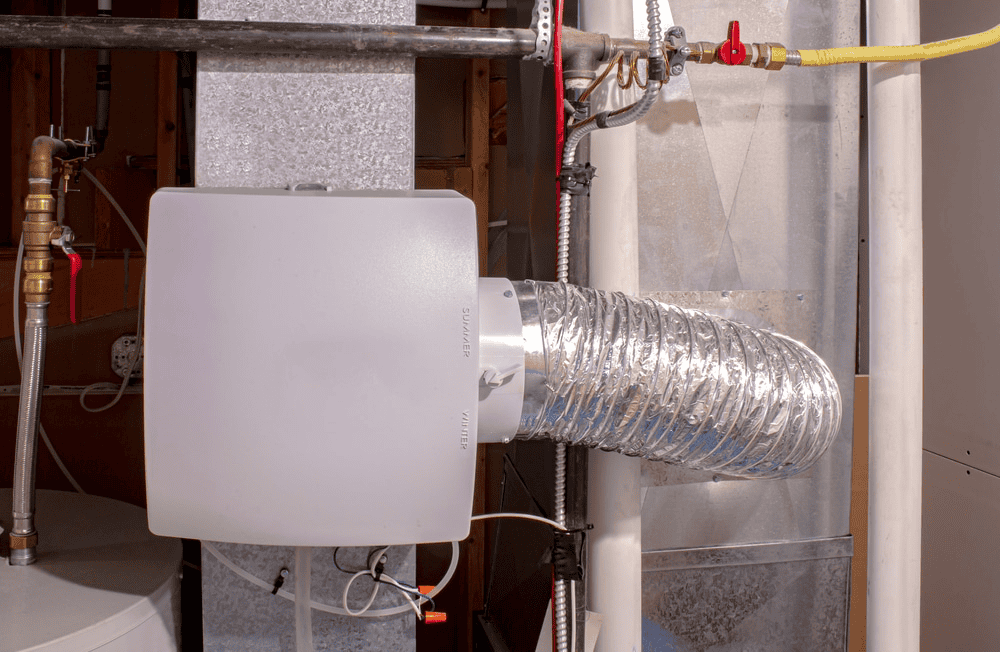
A central system connects right into your forced-air ductwork to treat every room evenly. A central furnace humidifier connects directly to your home water supply line and your furnace supply plenum (the main duct that distributes heated air from the furnace). As warm air moves through your ductwork, the system adds clean water vapor directly into the airstream. The furnace blower then carries this conditioned air to every room through your heat registers.
Central System Integration Compared to Portable Units
Keeping an entire home comfortable through the winter requires steady, dependable moisture. Central humidification equipment is designed to add far more moisture per day than small tabletop units, which typically hold only one or two gallons of water at a time. Homeowners have to carry heavy water jugs to refill those tanks multiple times a day. Portable units also need frequent scrubbing to stop mineral scale, white dust, and mold.
A whole-home system automates moisture delivery across every room through your heating ducts, though homeowners should keep a few practical points in mind before installation. A central unit requires professional installation into your ductwork, plumbing lines, and low-voltage wiring. Minerals from tap water also collect on the internal filter pad over time, so homeowners typically replace the pad once per heating season. Evaporative models send water over the pad and wash excess minerals down a floor drain, which helps reduce the risk of clogs.
When a technician services your unit each year, the system runs quietly without any daily refilling chores.
Bypass Humidifier vs. Fan-Powered Humidifier Models
Treating dry winter air effectively requires choosing the right humidifier style for your home layout. Experienced HVAC technicians install two main types of evaporative central humidifiers: bypass and fan-powered.
Bypass humidifier units mount between your warm air supply duct and cold air return duct. The furnace blower pushes warm air through a bypass pipe and across a moist water panel pad, and the pad absorbs fresh water from a supply tube so passing air picks up clean moisture. Standard bypass models are typically rated to deliver substantially more moisture per day than a portable unit, though exact output varies by manufacturer and model.
Fan-powered humidifier units use an internal fan to blow air directly across the water panel. Fan-powered design generally lets these units add more moisture per day than a similarly sized bypass model, though exact output again varies by manufacturer. Because they do not need a bypass pipe, fan-powered models fit well in compact basements and tight utility closets.
Precise Moisture Management With a Smart Humidistat
Precise moisture control requires accurate adjustments as outdoor temperatures change throughout the winter. Adding too much indoor humidity during severe cold can cause condensation on window glass and exterior walls. Pairing your humidifier with a smart thermostat or digital smart humidistat (a control that measures and adjusts indoor humidity the way a thermostat manages temperature) can help manage moisture swings without constant manual adjustment.
A smart control reads an outdoor temperature sensor and adjusts your indoor humidity target as the weather shifts. When outdoor temperatures stay above 20 degrees Fahrenheit, a target of around 35% to 40% indoor relative humidity is commonly recommended. As outdoor temperatures drop between 0 and 20 degrees Fahrenheit, lowering the target to around 25% to 35% relative humidity is commonly recommended to help limit window condensation. Once temperatures fall below zero degrees Fahrenheit, lowering the target further, to around 15% to 25% relative humidity, is commonly recommended to help protect wall insulation and window glass.
Thermal Comfort and Energy Efficiency Benefits of Central Humidification
A whole house humidifier can provide clear financial benefits for your monthly heating budget. Balanced moisture helps indoor rooms feel warmer without using extra natural gas or electricity. Adding moisture improves your overall indoor air quality while reducing daily operating stress on your heating equipment.
Warmer Air at Lower Thermostat Settings
Dry winter air speeds up the evaporation of moisture from your skin. This quick evaporation pulls heat away from your body and leaves you feeling cold indoors. Because of this chilling effect, you might feel cold even when your thermostat reads 70 degrees. Adding humidity slows down skin moisture loss so your body stays naturally warmer throughout the day.
Humidity changes how warm indoor air feels against your skin. Moist air holds heat close to your body, so many homeowners find they can keep the thermostat a degree or two lower without feeling a chill in their living room.
Reducing Strain on Heating Systems
Turning your thermostat down saves energy and lowers heating bills during long winter freezes. Even a small downward adjustment shortens furnace run times in freezing Western Pennsylvania weather. Shorter heating cycles burn less fuel. They also reduce daily mechanical wear on your central heating systems.
Humidified air holds and transfers thermal energy smoothly as it moves through your ductwork. This balanced heat transfer helps reduce cold spots in distant bedrooms, drafty hallways, and finished basements. Your furnace turns on less often, which protects blower motors, hot surface igniters, and heat exchangers. A lighter workload helps your heating equipment run reliably for many years.
Protecting Your Pittsburgh Home From Winter Air Dryness
Solving persistent winter dryness problems requires the right equipment setup for your home layout. Cold Pennsylvania winters strip natural moisture from indoor air, leaving rooms uncomfortably dry. Portable misting units create constant refilling chores without delivering sufficient moisture to protect your entire home.
A central system tied into your ductwork delivers balanced moisture to every room automatically. Balanced humidity supports respiratory comfort, helps cut down on static shocks, and can reduce hardwood flooring shrinkage. Proper moisture levels also keep your home comfortable at lower thermostat settings throughout the coldest months. A professional assessment helps match your heating system with the correct humidifier capacity for your home. Schedule a whole-home humidification system evaluation with an experienced local contractor to find the ideal solution for your household.
Schedule Your Whole-Home Humidifier Installation Today
If dry winter air disrupts your comfort, contact us today for expert help. Our licensed technicians have delivered trusted heating, cooling, and indoor air quality services across Pittsburgh since 1988. We inspect your furnace and duct layout to recommend the right furnace humidifier installation for your living space. Our team explains your equipment options clearly before any installation work begins. From seasonal maintenance to 24/7 emergency services, our experienced technicians deliver dependable care for your home. Contact our team online to schedule your whole-home humidifier installation today.
Source
- Mold course chapter 2: moisture, mold, and your home. EPA. Accessed November 2026. https://www.epa.gov/mold/mold-course-chapter-2.