
When cold weather arrives in the Pittsburgh area, A-Comfort Service helps your heating system run steady cycles to keep your home warm. If your furnace runs for only a few minutes and shuts off early, you are dealing with furnace short cycling. This quick pattern keeps your home from warming up evenly. It also puts heavy mechanical wear on key heating parts.
Knowing why furnace short cycling happens helps you find the right solution. Quick checks can solve some problems right away, but other issues need a trained technician. Here is a clear guide to common causes, simple steps to take, and repairs that bring back steady heat.
Airflow Restrictions That Trigger Safety Shutdowns
Poor airflow is one of the most common causes of furnace short cycling. Modern heaters use safety switches to track internal heat. When air cannot move freely through the system, heat builds up fast. That trapped heat pushes temperatures past safe limits.
The Danger of a Dirty Air Filter
A dirty air filter blocks moving air. When cool air cannot pass across the blower, heat spikes inside the heat exchanger, the component that transfers heat from the burners to the air circulating through your ducts. This causes an overheating furnace that trips your system’s safety controls. The high-limit switch then opens the circuit and shuts off fuel to the burners. Under typical factory settings, these switches trip once the plenum, the chamber where heated air collects before entering your ductwork, reaches an unsafe temperature.1
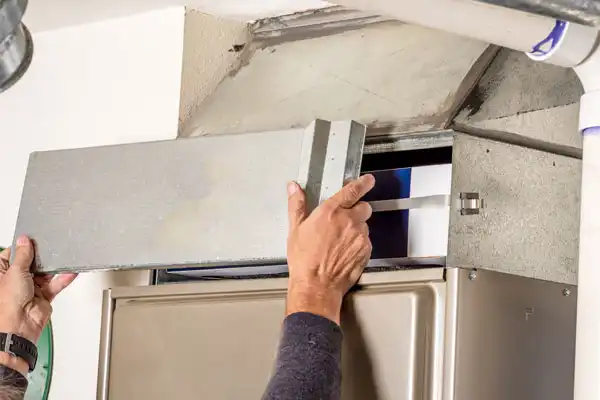
Once the blower fan cools the heat exchanger down, the switch resets and the burners relight. This short cycle repeats until you replace the clogged filter. Checking your filter once a month during cold winter weather stops furnace short cycling and keeps air moving freely.
Blocked Vents and Obstructed Return Air Grilles
Airflow problems also happen when supply vents or return grilles are blocked. Many homeowners close supply vents in unused rooms to save heat. However, closing vents raises static air pressure inside your ductwork. Furniture, rugs, and storage boxes placed right against return grilles also choke off airflow.
Walk through your home to make sure every supply vent and return grille stays open and clear. Clear vents allow the blower fan to push warm air through the house without tripping safety switches.
Sensor, Ignition, and Thermostat Malfunctions
When airflow is clear, furnace short cycling often points to a bad sensor or control board issue. Gas heaters rely on electronic controls to make sure fuel burns safely.
A Corroded or Sooty Flame Sensor
The flame sensor is a thin metal rod placed right in front of the burner flame. Its job is to detect fire by carrying a small electric current. A clean sensor sends a steady, low-amperage signal to the control board, and the exact reading varies by furnace model. Over time, soot coats the metal rod. This coating drops the current. Once the signal falls too low, the control board can no longer sense the flame.
When the board misses that signal right after ignition, it shuts the gas valve. This safety step stops raw gas from collecting inside the burner box. It is also the main reason your furnace keeps turning off. A technician can clean the rod with a fine abrasive pad, or install a new sensor if the ceramic base is cracked.
Thermostat Calibration and Placement Problems
Your heating system relies on your thermostat for run signals. A bad thermostat sends wrong readings to the control board or misjudges room temperatures. If your thermostat sits in direct sunlight, in drafty hallways, or near a warm vent, it senses false heat. It then shuts the heating cycle down too soon.
Older dial thermostats can also trigger furnace short cycling when the heat anticipator is set wrong. Sliding that small pointer to a longer cycle setting often solves the problem. If your thermostat cannot hold a steady temperature, replacing it can restore more reliable control. Upgrading to a modern smart thermostat provides remote monitoring and keeps run cycles smooth.
Equipment Sizing and Flue Venting Obstructions
Not every cycle problem comes from dirt or a bad sensor. In some homes, the furnace is simply too large for the living space. In other cases, exhaust pipes cannot vent combustion gases outdoors safely. Left alone, frequent short cycles wear out parts quickly and drive up heating bills.
Dealing With an Oversized Heating Unit
A larger furnace is not always better for your home. When a unit produces too many BTUs, or British thermal units, the standard measure of heating output, for your home size, it warms the air near the thermostat too fast. The system shuts down before heat spreads to outer rooms. This mismatch causes cold spots and constant on-and-off cycling.
System replacement is not the only way to handle an oversized heater. Before scheduling a new furnace installation, you can test a few practical adjustments first. A technician can adjust blower fan speeds to spread air through the ducts more evenly. On some units, a technician can install a two-stage gas valve. That valve lets burners run at a lower flame on mild winter days. Running at a lower rate lengthens heating cycles and balances room temperatures.
When adjustments cannot solve the issue, a properly sized system is often the more effective long-term option. Contractors follow Air Conditioning Contractors of America (ACCA) Manual J standards to calculate heat loss.2 This load calculation matches furnace output to your home insulation, window exposure, and square footage.
Exhaust Pipe Blockages and Pressure Switch Trips
Modern heating systems use PVC or metal pipes to vent exhaust gases outdoors. A small draft fan pulls these gases through the heat exchanger. Before burners light, an air pressure switch checks for safe draft flow inside the vent pipe.
If snow, ice, or animal nests block the vent opening, the pressure switch stays open. This cuts power to the gas valve right away. The safety switch stops your gas furnace from running when exhaust cannot escape safely. A trained technician uses a digital manometer to measure draft pressure and clear the vent blockage.
Protecting Your Heating System From Unnecessary Wear
Addressing furnace short cycling early can protect your equipment from sudden breakdowns. It also keeps your home warm during cold winter freezes. Replacing a dirty filter and clearing return grilles are simple steps you can take on your own.
When short cycles continue, your heating system needs professional testing tools. Your ignition parts, safety switches, and exhaust vents must work together smoothly. Scheduling annual furnace maintenance gives your system a thorough check before freezing weather arrives. A technician cleans key sensors, checks electrical wiring, and tests each safety limit switch.
When to Call a Professional for Furnace Short Cycling
Homeowners can often fix simple airflow problems by changing a dirty air filter or opening closed supply vents. However, electrical issues, gas valve troubles, and venting clogs need specialized testing tools. Handling gas lines and electrical wiring without proper training also brings real safety risks.
If basic steps do not bring back steady heat, professional service is your best path forward. Technicians can test electrical currents, inspect safety limit switches, and check flue draft pressure. These tests pinpoint why your heat shuts down early. For homeowners across the Pittsburgh area working through furnace short cycling, contact us for furnace repair to help restore safe, steady heat.
Sources
- State of Vermont Department for Children and Families. Appendix I: Evaluating Ductwork, in Technical Policies & Procedures Manual (2026 Edition). Weatherization Assistance Program. Accessed November 2026. https://outside.vermont.gov/dept/DCF/Shared%20Documents/OEO/WAP/WAP-Manual.pdf.
- Manual J® residential load calculation. ACCA. Accessed November, 2026. https://www.acca.org/Manual-J.